

Meta description: Discover vegetarian food in India, from South Indian dosa to Gujarati thalis and Rajasthani specialities, with ordering tips and advice for vegetarian and vegan travellers.
Vegetarian food in India is far more varied than a menu of paneer curries and vegetable biryani might suggest. A meal in Gujarat may bring sweet-sour lentil preparations, vegetables, flatbreads and farsan. In Tamil Nadu, rice, lentils, coconut chutney and sambar form the basis of familiar meals. In Rajasthan, beans, gram flour, millet and preserved ingredients reflect a different landscape and food tradition.
The differences are not simply regional variations of the same dishes. Ingredients, cooking methods, religious practices, climate and local agricultural traditions have all helped shape India’s vegetarian kitchens.
For travellers, that variety is good news. Vegetarian food is available in many parts of the country, from small breakfast counters to family-run restaurants and elaborate regional thalis. But vegetarian and vegan are not interchangeable, and a dish described as vegetarian may still contain dairy, ghee or other ingredients you prefer to avoid.
This guide introduces the dishes worth seeking out, the regions where they are especially characteristic, and the practical details that make ordering easier.
What does vegetarian food mean in India?
In everyday Indian dining, vegetarian generally means food prepared without meat, poultry or fish. Dairy products such as milk, yoghurt, butter, ghee and paneer are commonly included. Eggs may be listed separately, so travellers who avoid eggs should ask rather than assume.
You will often see the word veg on menus and a green symbol on packaged foods. India’s food-labelling rules distinguish vegetarian and non-vegetarian products, but a green vegetarian symbol does not mean a product is vegan.
You may also encounter the phrase pure veg. Its meaning can vary by establishment. Some restaurants use it to indicate a strictly vegetarian kitchen; others may use it as a general description of their menu. Certain religious or culinary traditions also avoid onion and garlic, but this is not a universal definition of vegetarian food.
For most visitors, the simplest approach is to explain the ingredients you do not eat rather than relying on a label alone.
Indian vegetarian dishes to try
Start with dishes that appeal to you, then use them as a way into regional cuisine. The following are useful introductions, not a definitive ranking of India’s best vegetarian foods.
1. Masala dosa
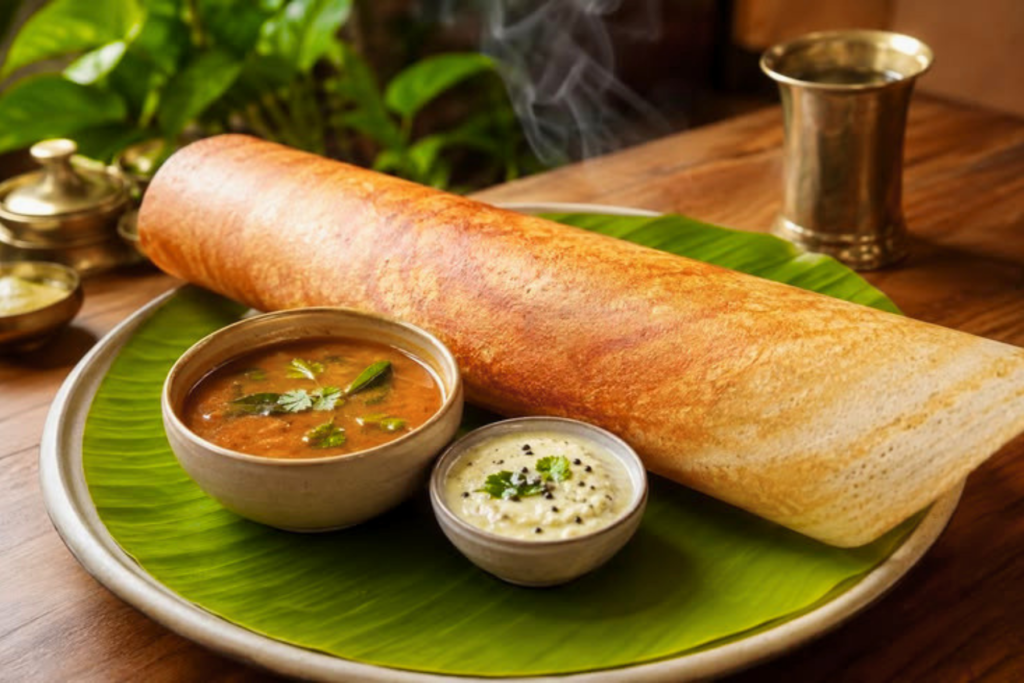
A dosa is a thin preparation made from fermented rice-and-lentil batter, cooked on a hot griddle. The familiar masala dosa contains a spiced potato filling and is usually served with coconut chutney and sambar, a lentil-based preparation with vegetables and spices.
The dosa may be crisp around the edges and softer where it folds around the filling. Other versions include plain dosa, rava dosa and regional variations with different fillings and accompaniments.
Where to try it: Tamil Nadu and Karnataka are excellent starting points, though dosa restaurants are common across India.
Best for: Breakfast, a light meal or a first introduction to South Indian vegetarian cooking.
Dietary note: Ask whether the dosa and accompaniments contain ghee or dairy if you are vegan.
2. Idli and vada
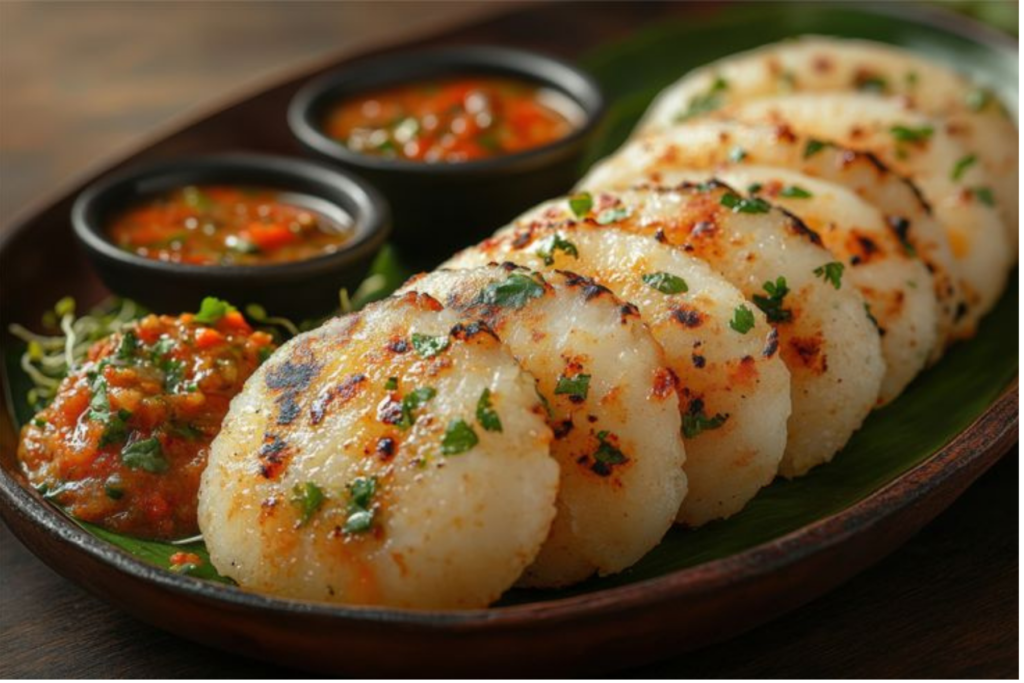
Idli are soft, steamed cakes made from fermented batter, while vada are savoury fritters that are commonly made from lentils. They are often served together with sambar and one or more chutneys.
This combination is popular for breakfast, but it can be eaten at other times too. The contrast between soft idli, crisp vada and tangy accompaniments makes a simple plate more interesting than its appearance might suggest.
Where to try it: South Indian breakfast counters, especially in cities such as Chennai and Bengaluru.
Best for: Travellers who want a filling meal without a heavy curry.
Dietary note: Idli is steamed rather than fried, but check the ingredients and accompaniments if you have specific dietary restrictions.
3. Chole bhature
This North Indian favourite pairs spiced chickpeas with bhature, large, puffy breads that are usually deep-fried. It is a substantial meal, often served with pickles, onions or other accompaniments.
The chickpeas provide the main flavour, with spices and the cooking method varying between establishments. The bread is rich, so this is more of a leisurely brunch or lunch than a light snack.
Where to try it: Delhi and other parts of northern India.
Best for: A hearty meal when you have time to sit down.
Dietary note: The bread may contain dairy or other ingredients that differ between recipes. Ask if you need to avoid them.
4. Dal and roti
Lentils and other pulses are fundamental to many Indian meals. Dal can be thin and comforting, thick and hearty, or richly seasoned with a final tempering of spices in oil or ghee. It is often served with roti, chapati or another flatbread.
There is no single dal recipe that represents the whole country. The pulse used, consistency, seasoning and accompaniments change from one kitchen to another.
Where to try it: Almost anywhere in India, from simple neighbourhood eateries to regional restaurants.
Best for: An everyday meal that can be adjusted to your appetite and preference for spice.
Dietary note: Ask whether ghee, butter or cream is added, particularly if you are vegan.
5. Gujarati vegetarian food
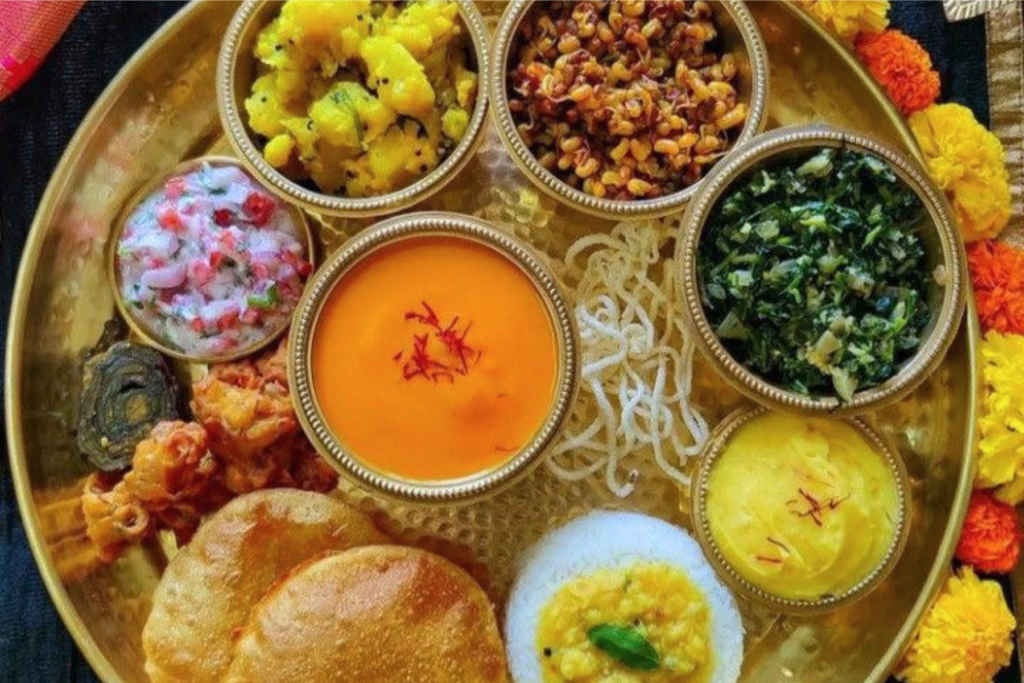
Gujarati cuisine is known for a broad repertoire of vegetarian dishes, including dhokla, thepla, undhiyu and several varieties of farsan—savoury snacks and preparations served as part of a meal or eaten on their own.
Undhiyu is a mixed-vegetable preparation associated particularly with Gujarat, while thepla are spiced flatbreads that can be convenient for travel. Dhokla is a soft, savoury preparation commonly made from fermented batter, though ingredients vary by type.
Gujarati food is sometimes described as uniformly sweet. That is an oversimplification: the balance of sweet, sour, salty and spicy flavours varies by dish, household and region.
Where to try it: Gujarat, especially Ahmedabad and other cities with established Gujarati restaurants.
Best for: Travellers interested in vegetable-based dishes, snacks and complete vegetarian meals.
6. Rajasthani vegetarian specialities
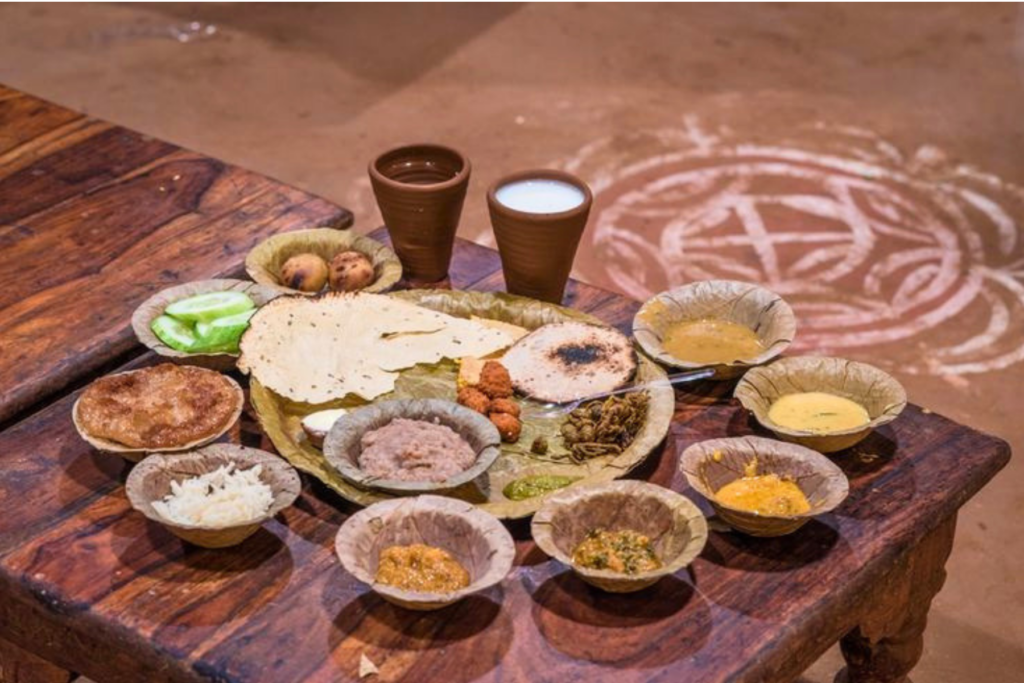
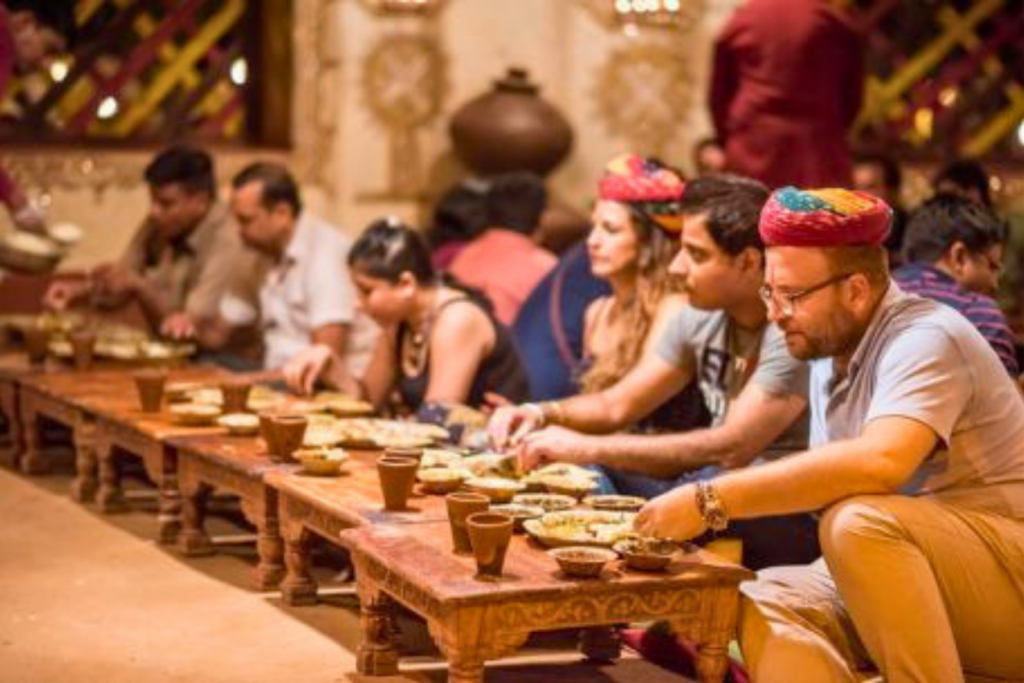
Rajasthan’s food traditions reflect arid conditions, local grains, pulses and techniques for making ingredients last. Vegetarian dishes worth looking for include dal baati churma, gatte ki sabzi, ker sangri and a variety of kachoris.
Dal baati churma combines lentils, baked wheat-dough balls and a sweet, crumbly preparation made from grain. Gatte ki sabzi uses gram-flour dumplings cooked in a spiced gravy. Ker sangri brings together regional desert ingredients in a distinctive preparation.
These are not interchangeable dishes, and each offers a different experience of Rajasthani cooking.
Where to try it: Jaipur and other parts of Rajasthan.
Best for: A substantial regional meal rather than a quick snack.
Dietary note: Ghee is common in some preparations. Ask about dairy and the cooking fat if necessary.
7. Punjabi vegetarian food
Punjabi cuisine includes hearty lentil dishes, vegetable curries, stuffed parathas, breads and dairy-based accompaniments. Sarson da saag with makki di roti is a well-known combination associated with the region, while rajma chawal pairs kidney-bean curry with rice.
Paneer dishes are also popular, but they are only one part of a much wider vegetarian repertoire. The use of butter, ghee, yoghurt and cream can make some meals particularly rich.
Where to try it: Punjab and Punjabi restaurants in cities across India.
Best for: Travellers who enjoy breads, pulses and robustly seasoned dishes.
Dietary note: If you avoid dairy, explain this clearly. Butter and cream may be incorporated into a gravy rather than served separately.
8. Bengali vegetarian cooking
Bengali cuisine has an extensive vegetarian tradition, including preparations made with seasonal vegetables, leafy greens, lentils, potatoes and aubergines. Shukto, a vegetable preparation with a distinctive bitter element, and aloo posto, potatoes cooked with poppy-seed paste, are examples worth exploring where available.
Vegetarian cooking in Bengal also has different histories and practices across households and communities. It is worth looking beyond the assumption that Bengali food is defined only by fish.
Where to try it: Kolkata and restaurants specialising in Bengali cuisine.
Best for: Travellers who want to explore vegetable dishes beyond the familiar curry-and-paneer format.
Dietary note: Recipes vary. Ask about the use of onion, garlic, mustard oil and other ingredients if they matter to you.
9. Gujarati and Maharashtrian snacks
Vegetarian snacks are not limited to street-food stalls. Across Gujarat and Maharashtra, you may encounter poha, sabudana khichdi, khandvi, dhokla and other regional preparations served for breakfast, between meals or as part of a larger spread.
Poha is made from flattened rice, usually seasoned with ingredients such as mustard seeds, turmeric, onions and peanuts, depending on the recipe. Sabudana khichdi uses tapioca pearls and is especially associated with fasting meals in some communities.
These foods can be excellent for a smaller meal, but they are not all available everywhere or prepared in the same way.
Where to try them: Maharashtra and Gujarat, especially at local breakfast counters and regional eateries.
Best for: Sampling a variety of vegetarian foods without committing to a large meal.
Dietary note: Peanuts and other ingredients may be important for anyone with allergies. Always ask about preparation.
10. Pahari and Himalayan vegetarian food
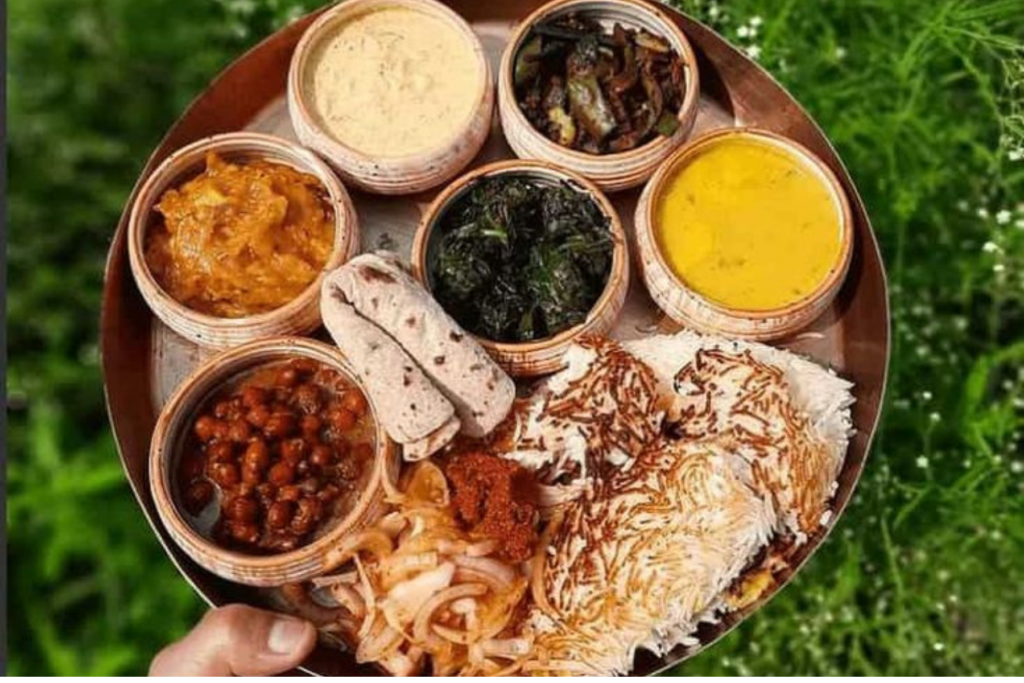
The Himalayan foothills have their own food traditions, shaped by local crops, leafy greens, lentils, millets and seasonal ingredients. In Uttarakhand, dishes such as aloo ke gutke, kandalee ka saag, bhatt ki churkani and regional chutneys offer a different perspective from the restaurant menus familiar in India’s larger cities.
The details vary between Garhwali, Kumaoni and other local traditions. Travellers should look for dishes associated with the area they are visiting rather than expecting one uniform Himalayan cuisine.
Where to try it: Uttarakhand and specialist regional eateries in other parts of India.
Best for: Visitors interested in local food traditions and ingredients beyond mainstream restaurant menus.
Dietary note: Some regional dishes use ghee or other dairy ingredients, so confirm preparation if you avoid them.
Where to explore vegetarian food in India
You do not need to travel across India just to try every dish in this guide. Use the cities already on your itinerary to discover their own food traditions.
Delhi
Delhi offers Punjabi food, North Indian curries, chole bhature, stuffed parathas, chaat and a broad range of vegetarian restaurant meals. It is an easy place to begin if you want familiar dishes before exploring more regional specialities.
Look for establishments that specialise in a particular cuisine rather than expecting one restaurant to represent all of India’s vegetarian food.
Plan your visit with Taj Explore’s New Delhi guide.
Jaipur
Jaipur is a good place to explore Rajasthani cooking alongside the city’s historic architecture and bazaars. Look for dal baati churma, gatte ki sabzi, ker sangri and local snack-shop specialities.
Ask whether a dish is prepared in a traditional style or adapted for a broader restaurant audience. Both can be worthwhile, but they may offer different experiences.
See Taj Explore’s Jaipur guide.
Mumbai
Mumbai’s vegetarian options range from vada pav, pav bhaji and poha to Gujarati meals, South Indian breakfasts and modern plant-based restaurants. The city’s food reflects its varied communities and the everyday need for quick, convenient meals.
If you are vegetarian but not vegan, paneer and dairy-rich dishes may be easy to find. If you avoid dairy, ask about butter, ghee, yoghurt and cream before ordering.
Explore Taj Explore’s Mumbai guide.
Kolkata
Kolkata is known for sweets and fish, but its vegetarian cooking is worth exploring in its own right. Look for Bengali vegetable dishes, luchi with aloo preparations, vegetarian thalis and South Indian eateries serving dosa and idli.
If you are interested in Bengali cuisine, ask about seasonal vegetables and dishes that may not appear on the most tourist-oriented menus.
Chennai and Bengaluru
These cities are especially useful for travellers interested in South Indian vegetarian food. Breakfast counters and casual eateries serve dosa, idli, vada, pongal and other dishes, often with sambar and chutneys.
Bengaluru’s darshini-style eateries are a useful example of a local format: quick, informal vegetarian dining built around a compact menu and fast service. Chennai offers its own deep tradition of tiffin dishes and vegetarian restaurants.
For an additional perspective, read National Geographic’s guide to Bengaluru’s vegetarian food scene.
Vegetarian food versus vegan food
This distinction matters if you avoid all animal-derived ingredients.
Vegetarian food generally excludes meat, poultry and fish but may include milk, yoghurt, butter, ghee, cream and paneer. Eggs should be checked separately.
Vegan food excludes animal-derived ingredients, including dairy, eggs and honey. It also requires attention to ingredients that may not be obvious from a dish’s name.
For example:
- A paneer curry is vegetarian but not vegan.
- A dal may be vegan when prepared with oil, but not when finished with ghee or butter.
- A vegetable pulao may be vegan or may contain ghee.
- A dosa may be made without dairy, but its accompaniments and cooking fat still need checking.
- Roti may be made with flour and water, while some breads are brushed with butter or ghee.
India has a strong tradition of vegetarian cooking, but that does not mean every vegetarian restaurant is equipped to meet vegan requirements. Ask about the ingredients and preparation method, and explain your needs clearly.
For more plant-based dining advice, see Taj Explore’s Vegan Restaurants in India: A Complete Guide for Tourists.
How to order vegetarian food confidently
A few simple questions can make ordering easier, particularly when a menu is unfamiliar.
- “Is this vegetarian?” Ask whether it contains meat, fish or stock made from animal products.
- “Does this contain egg?” Useful for travellers who avoid eggs as well as meat.
- “Does this contain milk, butter or ghee?” Important for vegan visitors and anyone avoiding dairy.
- “Can you prepare this without ghee?” Ask before ordering, as some dishes are finished with ghee rather than cooked entirely in it.
- “Is onion or garlic used?” Relevant to some religious or personal dietary practices, but not a general requirement for vegetarian food.
In many restaurants, the green vegetarian symbol on packaged foods and displayed menus can be helpful. India’s Food Safety and Standards Authority of India (FSSAI) publishes official guidance on food labelling. You can consult its food-labelling guidance for more detail.
For packaged vegan products, FSSAI also maintains a dedicated vegan-food standards page. These standards and labels can help, but for freshly prepared restaurant dishes, direct questions remain important.
How much does vegetarian food cost?
Vegetarian food in India spans a wide range of prices. A simple breakfast at a local eatery may cost much less than a meal at a destination restaurant, hotel or premium dining establishment. Location, portion size, ingredients and service all affect the final bill.
Rather than relying on one nationwide price range, use current menus in the cities on your itinerary to set a realistic budget. If a menu does not show prices, ask before ordering. A thali may offer good value when you want to try several dishes in one meal, but portion sizes and what is included differ.
For publication, current sample prices should be checked against recent menus from a representative mix of local eateries, casual restaurants and higher-end venues. Prices should be dated or clearly labelled as indicative rather than presented as permanent facts.
Is vegetarian food always healthy?
Not automatically. Vegetarian meals can include lentils, beans, vegetables, whole grains and a range of other ingredients, but they can also be high in refined carbohydrates, salt, sugar, oil or saturated fat.
A meal of dal, vegetables, roti or rice can be balanced, while a plate dominated by deep-fried snacks or rich gravies will have a different nutritional profile. The word vegetarian describes the ingredients a meal excludes; it does not guarantee a particular nutritional quality.
If you have specific dietary or medical needs, consider the full meal rather than judging it by its vegetarian label alone.
Frequently asked questions
Is vegetarian food easy to find in India?
Vegetarian options are available across much of India, including in restaurants, breakfast counters and many local eateries. The range varies by location, and a restaurant’s menu should be checked if you have strict dietary requirements.
What should a first-time visitor try?
Masala dosa, idli, dal with roti, chole bhature and a regional thali are useful starting points. Choose dishes based on the region you are visiting, then explore local specialities rather than ordering the same familiar meal everywhere.
Is Indian vegetarian food always spicy?
No. Some dishes are mild, while others use chillies and strong spices. If you are sensitive to heat, ask about the preparation and request less chilli where possible.
Can vegetarians eat Indian food without dairy?
Yes, but it requires more careful ordering. Many traditional vegetarian dishes use ghee, butter, yoghurt, cream or paneer. Ask about cooking fats and finishing ingredients, and consider dishes prepared with oil when appropriate.
Is a green symbol the same as a vegan label?
No. India’s vegetarian label does not mean that a product is free from dairy or other animal-derived ingredients. Check the ingredients and use appropriate vegan labelling where available.
What is a vegetarian thali?
A thali is a meal served with several components, often including rice or flatbread, dal, vegetables, chutneys, pickles and other accompaniments. Its contents vary by region and restaurant. Our dedicated Traditional Thalis guide will explore these regional differences in more detail.
Discover India’s vegetarian food beyond the familiar
India’s vegetarian food is not a single tradition but many: from the dosa counters of the south to Gujarati snacks, Rajasthani specialities, Punjabi lentil dishes and the regional cooking of the Himalayan foothills.
Let the place you visit guide what you order. Ask about local dishes, be clear about your dietary requirements, and give unfamiliar ingredients a chance. You may discover that the most memorable meal is not the best-known curry, but a simple regional preparation that tells you something about the place where you are eating.



Comment (0)