

India is a long way from home for many travelers. Depending on where you’re flying from, getting here might mean a direct overnight flight, a connection through the Middle East, or a journey across several time zones before you finally see the Indian subcontinent from your window.
But booking a flight to India involves more than finding the lowest fare. The airport you choose can shape your entire itinerary, a short connection can become a stressful dash between terminals, and arriving at the wrong end of the country can add an unnecessary day of travel.
For first-time visitors, a little planning goes a long way. Whether you’re coming to see the Taj Mahal, explore Rajasthan’s historic cities, spend time in Kerala or travel across several regions, this guide will help you choose your route, compare flights and prepare for arrival.
Which Airport Should You Fly Into in India?
India has several major international airports, and the best one for your trip depends on where you want to go. Rather than choosing an airport solely because its fare looks attractive, start with your itinerary and work backward.
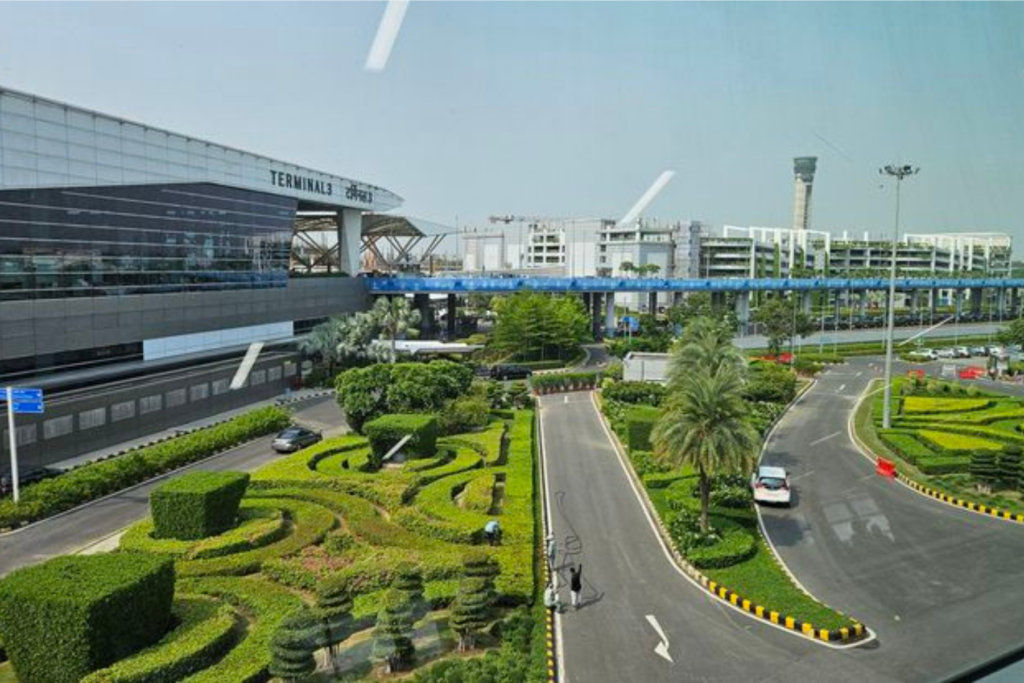
Delhi — The Best Starting Point for the Golden Triangle
Delhi’s Indira Gandhi International Airport (DEL) is one of India’s principal international gateways, with connections across Europe, the Middle East, North America, Asia and other regions.
For travelers planning the classic Golden Triangle route, Delhi is usually the most convenient starting point. The circuit connects Delhi, Agra and Jaipur, bringing together Mughal architecture, royal palaces, historic markets and some of India’s best-known cultural landmarks.
Delhi is also a useful base for journeys into Rajasthan and northern India.
Choose Delhi if you’re planning to:
- Visit Delhi, Agra and Jaipur on one trip.
- See the Taj Mahal and explore Rajasthan.
- Begin a wider journey through northern India.
- Connect to domestic flights or onward rail journeys.
If the Golden Triangle is your priority, flying into Delhi will usually save you unnecessary backtracking.
Mumbai — A Gateway to Western and Southern India
Mumbai’s Chhatrapati Shivaji Maharaj International Airport (BOM) is another major international hub, particularly useful for travelers visiting western India or connecting onward to other parts of the country.
The city itself offers a very different introduction to India from Delhi: coastal views, Art Deco architecture, historic neighborhoods, contemporary galleries and a distinctive food culture.
Choose Mumbai if you’re planning to:
- Explore Mumbai and Maharashtra.
- Visit Goa or other destinations along the western coast.
- Begin a trip through western or central India.
- Find a suitable international connection before continuing domestically.
If your itinerary focuses on Delhi, Agra and Jaipur, however, compare the cost and travel time of reaching northern India before choosing Mumbai simply because the international ticket is cheaper.
Bengaluru, Chennai, Hyderabad and Kochi
Several other airports can make more sense depending on your destination.
- Bengaluru (BLR): A practical gateway for Bengaluru, Karnataka and parts of southern India.
- Chennai (MAA): Useful for Chennai, Tamil Nadu and journeys along the southeastern coast.
- Hyderabad (HYD): A convenient starting point for Hyderabad and parts of the Deccan region.
- Kochi (COK): Worth considering for Kerala’s backwaters, coastal towns and southern Indian experiences.
Jaipur and Goa also have international services, although the availability of direct routes depends on the departure city, airline and travel dates.
The important distinction is that an airport can be international without offering a convenient direct flight from your home city. Check the actual route before building your itinerary around it.
Direct Flights or Connecting Flights?
A direct flight is not always the cheapest option, but it can save valuable time and reduce the number of things that can go wrong along the way.

Direct flights
If a nonstop flight is available from your departure city to your preferred Indian airport, compare it carefully with connecting options.
The advantages are straightforward: fewer airport formalities, no connection to manage and less risk of missing a second flight because the first one was delayed.
For travelers on a short holiday, paying a little more for a direct flight may be worthwhile if it gives you several extra hours—or even a full day—at your destination.
Connecting flights
Many international travelers reach India through major aviation hubs in the Middle East, Europe or Asia.
A connection can reduce the fare or offer more departure options, but the total journey time matters just as much as the ticket price.
Before booking, check:
- The total travel time, including the layover.
- Whether both flights are on the same ticket.
- Whether you need to change terminals or airports.
- Whether checked baggage is transferred automatically.
- Whether you need a transit visa for the connecting country.
- What happens if your first flight is delayed.
A connection that looks inexpensive on a search results page may become less attractive when you add an overnight hotel stay, airport transfers or baggage fees.
How much layover time should you allow?
There is no single connection time that works for every airport or itinerary.
For a protected connection on one ticket, the airline generally builds in the required minimum connection time. You should still check whether the transfer involves immigration, security screening or a terminal change.
Be especially cautious with separate tickets. If you book two independent flights and the first one arrives late, the second airline may not be responsible for rebooking you.
For separate tickets, allow a much larger buffer and consider whether an overnight stop is sensible. If you must collect your luggage and check in again, the process may take considerably longer than a simple airside transfer.
When Should You Book Flights to India?
There is no universal date when every flight becomes cheapest. Airfares vary with demand, season, route, airline capacity and how many seats remain available.
For many international journeys, starting to compare fares around three to six months ahead is a sensible planning approach. If you’re traveling during a major holiday, peak winter season or a period with limited flight options, start looking earlier.
Use price alerts
Tools such as Google Flights, Skyscanner and Kayak can help you compare routes and monitor fare changes.
Instead of checking the same flight every day, set an alert and compare prices across a range of dates if your plans allow it.
Be flexible with your travel dates
Shifting your departure or return by a day or two can sometimes make a meaningful difference. Compare the total price of the trip rather than assuming that a particular weekday is always cheaper.
If you have flexibility, also compare nearby departure airports—but include the cost and time required to reach them.
Compare the complete fare, not just the headline price
A low fare may exclude checked baggage, advance seat selection or changes to your booking. Another ticket may cost slightly more upfront but include services you would otherwise pay for separately.
Before paying, compare:
- Checked and cabin baggage allowances.
- Seat-selection fees.
- Meals, where applicable.
- Change and cancellation conditions.
- Refund rules.
- Payment or booking fees.
The cheapest ticket is not always the best-value ticket.

Where Should You Search for Flights?
Start with flight comparison tools to understand the available routes, airlines, departure times and price differences.
Useful places to begin include:
- Google Flights — compare routes, dates and fare trends.
- Skyscanner — explore flexible dates and alternative airports.
- KAYAK — compare airlines and available itineraries.
Once you find a suitable flight, check the same itinerary on the airline’s official website.
Booking directly with an airline can make it easier to manage changes, cancellations and disruptions because you are dealing with the carrier responsible for your ticket. Third-party booking sites can still be useful, particularly for comparing complex routes, but understand who you must contact if something goes wrong.
Before paying, make sure the final price, baggage allowance, flight times and ticket conditions match what you intended to book.
Airlines & Their Strengths
- IndiGo – Largest domestic carrier, strong across all regions, reliable timings.
- Air India – Full-service, better for long routes (e.g., Delhi ↔ Chennai).
- Vistara – Premium service, comfortable for business & luxury travelers.
- SpiceJet – Good budget choice, covers smaller airports.
- Akasa Air – New airline, expanding quickly in South & West.
- AirAsia India – Budget-friendly, especially in South India.
- Alliance Air – Connects smaller airports under government’s UDAN regional scheme.
One-Way, Return or Multi-City Tickets?
The right ticket depends on how you plan to travel through India.
Return tickets
A return ticket is often the simplest option if you plan to arrive in and depart from the same city.
For example, you could fly into Delhi, visit Agra and Jaipur, and return to Delhi for your international flight home.
This works particularly well for a compact Golden Triangle itinerary.
Multi-city tickets
If you want to explore a larger part of India, a multi-city booking may save you from retracing your route.
For instance, you could arrive in Delhi and depart from Kochi after traveling through northern and southern India.
Compare the total cost of a multi-city ticket with separate one-way fares. Also consider the time and cost of reaching your final departure airport.
Open-jaw itineraries
An open-jaw itinerary means flying into one city and returning home from another, without necessarily booking every domestic leg as part of the same ticket.
This can be particularly useful if you are traveling across India in one direction rather than returning to your starting point.
A practical tip: Before booking, check whether your international arrival and departure airports fit the order of your itinerary. Saving a little on airfare can be a false economy if it adds a long, unnecessary journey at the end of your holiday.
What Is the Best Airport for a Golden Triangle Tour?
For most first-time visitors planning Delhi, Agra and Jaipur, Delhi is the most straightforward international arrival point.
A typical route looks like this:
Delhi → Agra → Jaipur → Delhi
You can also visit Jaipur before Agra, depending on your schedule and onward plans. Both approaches can work; the best order depends on your arrival time, departure flight and how many nights you have available.
If you arrive in Delhi after a long overnight flight, consider spending your first night there rather than immediately arranging a long road transfer. Resting before sightseeing can make the beginning of your trip much more enjoyable.
If your international flight arrives late at night, confirm your hotel check-in arrangements and airport transfer before departure.
And if your return flight leaves early in the morning, plan your final night accordingly. A comfortable last night near the airport may be worth more than squeezing in one extra sightseeing stop.
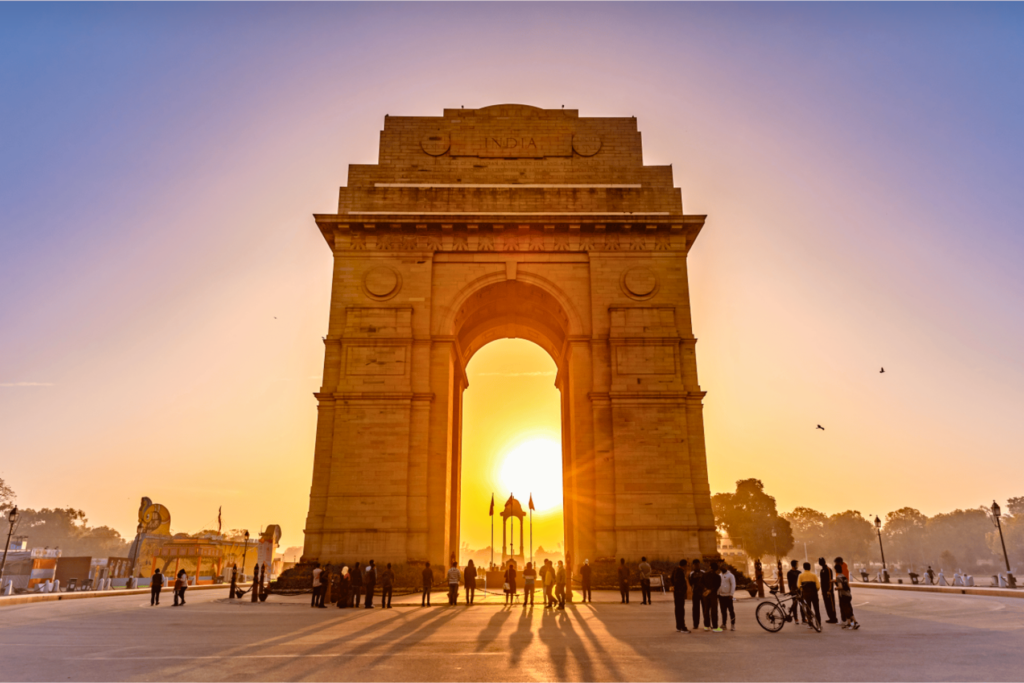
How to Plan Your Arrival in India
Booking your flight is only one part of the arrival process. A few practical arrangements can make the first hours in India much easier.
Check your visa before departure
Make sure you have the correct travel authorization for your nationality and purpose of visit. If you are traveling on an Indian e-Visa, check that your Electronic Travel Authorization has been approved and carry the required documentation.
You can review the official requirements through the Government of India’s visa portal.
Check the e-Arrival Card requirement
India has introduced an electronic arrival-information process for eligible travelers. Check the latest official instructions before your departure, including the permitted submission window and who must complete the form.
Use the official Indian visa and immigration portal rather than an unofficial website charging an unnecessary fee.
Confirm your first night’s accommodation
Have your hotel name, address and booking confirmation accessible when you arrive.
If you are landing late, message the hotel in advance to confirm that it can accommodate your arrival time.
Arrange your airport transfer
Decide how you will get from the airport to your accommodation before you land. Depending on the city and arrival time, this may mean a pre-booked transfer, an official airport taxi or a reputable ride-hailing service.
If you are traveling with a family, several suitcases or young children, consider how much luggage and space you will need.
Keep essentials in your cabin bag
Pack your passport, visa documents, medication, phone charger, a change of clothes and other essentials in your cabin baggage.
If your checked suitcase is delayed, you will still have what you need for the first day.

What to Expect on Arrival at an Indian Airport
After landing, follow the airport signs for immigration, baggage collection and customs, as applicable.
International passengers should have their passports and required travel documents ready for immigration. Once cleared, collect your checked baggage and follow the signs towards the arrivals area.
The layout and procedures vary by airport, terminal and passenger category, so follow the instructions displayed at the airport.
If someone is meeting you, confirm the meeting point in advance. Large airports can be busy, and your driver may not be able to wait directly outside the terminal entrance.
If your flight is delayed, contact your hotel or transfer provider as soon as possible. Keep their contact details saved offline so you can reach them even if your mobile connection is not working yet.
What About Domestic Flights Within India?
India is a large country, and domestic flights can be useful when your itinerary covers distant regions.
For example, a traveler combining the Golden Triangle with Kerala may find it more practical to fly between northern and southern India than to spend a large part of the trip traveling overland.
Domestic flights can also be useful for reaching destinations that are far from major railway routes or when time is limited.
However, not every journey requires a flight. For nearby destinations, a private car or train may offer a more convenient door-to-door experience.
For the Golden Triangle, road transfers are often practical because they let you travel between Delhi, Agra and Jaipur without repeatedly returning to an airport.
When booking a domestic connection after an international arrival, avoid scheduling it too tightly. Immigration, baggage collection, terminal changes and possible delays can all take time. A separate-ticket connection deserves an especially generous buffer.
1. North India Routes
- Major Hubs: Delhi (DEL), Chandigarh (IXC), Varanasi (VNS), Lucknow (LKO), Leh (IXL)
- Popular Routes:
- Delhi ↔ Varanasi (spiritual tourism)
- Delhi ↔ Leh / Srinagar (Himalayan region)
- Delhi ↔ Jaipur / Agra (Golden Triangle)
- Best Airlines: IndiGo, Air India, Vistara, SpiceJet (for hill region airports)
2. South India Routes
- Major Hubs: Bengaluru (BLR), Chennai (MAA), Hyderabad (HYD), Kochi (COK), Trivandrum (TRV)
- Popular Routes:
- Bengaluru ↔ Kochi (Kerala backwaters)
- Chennai ↔ Hyderabad (heritage & tech hubs)
- Bengaluru ↔ Goa (beaches)
- Best Airlines: IndiGo (largest network), Akasa Air (new but strong in South), AirAsia India (low-cost options)
3. West India Routes
- Major Hubs: Mumbai (BOM), Pune (PNQ), Goa (GOI), Ahmedabad (AMD), Udaipur (UDR)
- Popular Routes:
- Mumbai ↔ Goa (top tourist route)
- Mumbai ↔ Jaipur / Udaipur (Rajasthan tourism)
- Mumbai ↔ Ahmedabad (business + culture)
- Best Airlines: IndiGo, Vistara (premium option), Air India Express (budget-friendly)
Common Flight-Booking Mistakes to Avoid
Choosing the cheapest airport without checking the onward journey
- A lower international fare may be offset by domestic transport, another flight or an additional hotel night.
Ignoring baggage restrictions
- Check the allowance for every airline on your itinerary, especially if your journey includes separately booked flights.
Booking a risky connection
- A short connection or separate-ticket itinerary can leave little room for delays. Understand the consequences before committing.
Assuming a transit visa is never required
- Transit rules depend on your nationality, airport, terminal arrangements, length of stay and whether you pass through immigration. Verify the requirements with the relevant official authorities.
Overlooking arrival time
- Landing in the early hours of the morning or late at night can affect hotel check-in, transport availability and how you plan your first day.
Booking non-refundable arrangements too soon
- Before committing to hotels, transfers or tours, review your flight’s change and cancellation rules and consider the consequences if your schedule changes.
Leaving the airport transfer until the last minute
- A little preparation makes it easier to leave the airport and begin your trip without unnecessary confusion.
Your Flight-to-India Checklist
Before leaving home, make sure you have:
- A confirmed flight itinerary with the correct passenger details.
- Checked the passport and visa requirements.
- Reviewed baggage allowances for every flight.
- Confirmed any transit visa requirements.
- Saved your booking confirmation and airline contact details.
- Checked in online when available.
- Confirmed your first night’s accommodation.
- Arranged or planned your airport transfer.
- Saved essential documents and contact information offline.
- Checked your flight status before leaving for the airport.
Frequently Asked Questions
Which airport should I fly into for the Golden Triangle?
Delhi is usually the most convenient international arrival point for a trip covering Delhi, Agra and Jaipur. It offers a practical starting point for the circuit and extensive domestic connections.
How far in advance should I book flights to India?
For many international trips, comparing fares around three to six months before departure is a reasonable starting point. Book earlier if you are traveling during a busy period or have limited route options. Prices vary, so monitor fares instead of relying on a fixed rule.
Are direct flights better than connecting flights?
Direct flights usually reduce total journey time and remove the need to manage a connection. Connecting flights may offer better prices or more convenient departure times. Compare the complete journey, not just the fare.
Is Delhi or Mumbai better for arriving in India?
Neither is universally better. Delhi is particularly convenient for northern India and the Golden Triangle, while Mumbai is useful for western India and many onward connections. Choose according to your itinerary and available flights.
Should I book my international and domestic flights together?
Booking the journey on one ticket can provide better protection if a delay causes you to miss a connecting flight, subject to the ticket’s conditions. Separate tickets can offer flexibility but may leave you responsible for the cost of a missed connection.
Can I book a domestic flight immediately after landing in India?
You can, but allow sufficient time for immigration, baggage collection and any terminal transfer. If the flights are on separate tickets, leave a generous buffer because the second airline may not protect you if the international flight is delayed.
Is it better to book directly with the airline?
Booking directly can simplify changes, cancellations and disruption-related assistance. Comparison sites are useful for finding options, but compare the final fare and booking conditions before deciding.
Your Journey Begins Before You Land
The best flight is not necessarily the cheapest one or the one with the shortest time in the air. It is the one that fits your itinerary, budget and travel style without making the rest of your journey unnecessarily complicated.
For a first visit to India, start by deciding which region you want to explore. Choose an airport that fits that plan, compare the complete cost of the journey and leave enough time to arrive comfortably.
If Delhi, Agra and Jaipur are on your list, the Golden Triangle offers a rewarding introduction to India’s architecture, history and everyday life. Once your flights are settled, you can turn your attention to the next decisions: where to stay, how to travel between cities and how to make the most of your time.
Start planning your India journey with Taj Explore.










Comment (0)