

Meta description: Planning accessible travel in India? Learn how to check hotels, flights, trains, monuments and transport for wheelchair users and travellers with different access needs.
Travelling through India can mean exploring centuries-old monuments, navigating busy markets, taking long-distance trains or staying in cities with very different rhythms of life. For travellers with disabilities, older visitors, families with pushchairs and anyone who needs extra support getting around, the details behind those experiences matter just as much as the destination itself.
India has initiatives aimed at improving accessibility, including the government’s Accessible India Campaign. However, facilities and services vary considerably between locations. A hotel may have a lift but no step-free route to its entrance. A monument may provide a wheelchair but still have sections that are difficult to reach. An airport may offer assistance, while the journey to and from it presents the bigger challenge.
The most useful way to plan an accessible trip is to look at the entire journey, from arrival and transport to accommodation, sightseeing, toilets and rest breaks.
This guide explains what to check before booking, how to ask the right questions and how to build a more manageable itinerary in India.
1. What does accessible travel in India mean?
Accessibility is not limited to wheelchair ramps. Different travellers may need different arrangements, and one facility rarely meets every need.
- Mobility access: step-free entrances, lifts, suitable toilets, stable pathways, accessible vehicles and enough space to manoeuvre.
- Visual access: clear signs, tactile information where available, audio descriptions, verbal guidance and assistance navigating unfamiliar spaces.
- Hearing access: written instructions, visual announcements, text-based communication and sign-language support where available.
- Sensory and cognitive access: predictable schedules, quieter environments, clear instructions, reduced waiting where possible and time to adjust to unfamiliar surroundings.
- Non-visible disabilities and health needs: access to seating, rest breaks, medication storage, dietary arrangements or other individual requirements.
- Older travellers and temporary injuries: shorter walking distances, handrails, lifts, accessible bathrooms and reliable transport close to entrances.
You do not need to disclose a diagnosis to every hotel or tour provider. Explain the practical support you need instead. For example, “I can walk short distances but cannot manage stairs” is often more useful when arranging a room or sightseeing visit than a broad request for accessibility.
India’s Accessible India Campaign (Sugamya Bharat Abhiyan) addresses the built environment, transport and accessible information. It is an important policy initiative, but it should not be interpreted as a guarantee that every public space or tourist facility is fully accessible.
2. Is India accessible for travellers with disabilities?
The honest answer is that accessibility is possible in many situations, but inconsistent. Your experience depends on the particular property, transport service, attraction, route and type of assistance you need.
Major airports, some metro systems, selected railway facilities, newer hotels and certain tourist sites may offer useful accessibility features. At the same time, uneven pavements, high kerbs, steps, crowded streets, limited accessible toilets and gaps between transport connections can make independent movement difficult.
It helps to think in terms of specific questions rather than asking whether an entire city is accessible.
| Travel need | What to establish before you go |
|---|---|
| Wheelchair access | Are all essential parts of the route step-free, including the entrance, bathroom and sightseeing areas? |
| Limited walking or stamina | How far are the drop-off point, entrance, lift, room and main attractions from one another? |
| Visual impairment | Are signs readable or available in accessible formats? Can assistance or verbal descriptions be arranged? |
| Hearing impairment | Are announcements also displayed visually? Can staff communicate in writing? |
| Sensory needs | Can you avoid the busiest periods, arrange breaks or identify a quieter place to wait? |
| Medical or other support needs | Can the provider accommodate the specific requirement, and is suitable assistance available throughout the journey? |
When possible, seek recent information from people with similar access needs. A general hotel rating or a photograph of a ramp cannot tell you whether a bathroom has sufficient turning space, whether a lift reaches the required floor or whether the route beyond the entrance is usable.
3. Booking accessible accommodation
Accommodation is one of the most important decisions because it affects every day of the trip. A well-located room with the right facilities can reduce the need for complicated transfers and long journeys.
Do not rely on a listing that simply says “accessible room” or “wheelchair-friendly.” Ask the property to confirm the details in writing.
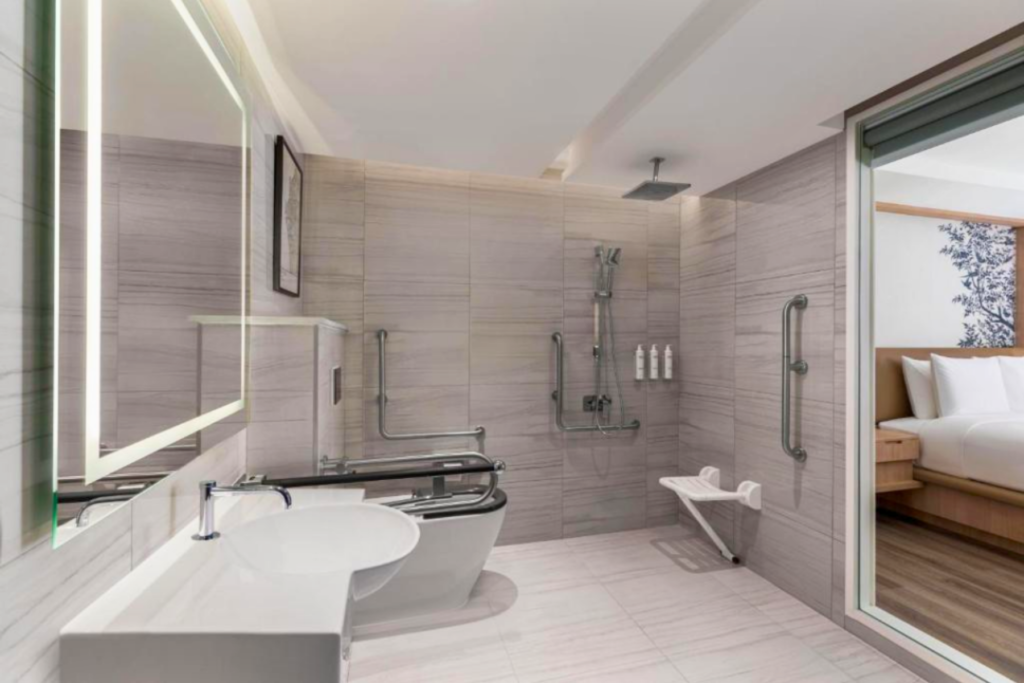
What to check with a hotel
- Entrance: Is there a step-free route from the pavement or vehicle drop-off point to reception?
- Lifts: Is there a lift, and does it reach the room’s floor and all the facilities you intend to use?
- Room access: Is the doorway wide enough for your mobility device? Is there enough space to move around the bed?
- Bathroom: Is the shower step-free or does it have a raised lip? Are grab rails installed? Is a shower seat available? Can you use the toilet safely and independently?
- Bed and furniture: Are the bed height and room layout suitable for your needs?
- Dining and shared areas: Can you reach the restaurant, breakfast area, garden or other facilities without using stairs?
- Staff assistance: What help can staff actually provide, and at what times?
- Emergency arrangements: Can you reach an exit or obtain assistance if the lift is unavailable?
If possible, request photographs or a short video showing the entrance, bathroom, shower, bed, lift and route from the drop-off point. For specific measurements, ask the property to provide them rather than relying on a generic accessibility label.
A more expensive hotel is not automatically more accessible, and a budget property is not automatically unsuitable. What matters is whether the confirmed features meet your requirements.
For more general booking advice, see Taj Explore’s guide to accommodation in India.
4. Flights and airport assistance
Air travel may be one of the more manageable parts of an accessible itinerary when assistance is arranged in advance. However, the service offered depends on the airline, airport, aircraft and the passenger’s individual requirements.
When booking a flight, contact the airline directly or use its official assistance process. Explain what you need rather than assuming that a wheelchair request covers every stage of the journey.
Ask about:
- Assistance from check-in through security and to the departure gate.
- Boarding and disembarking arrangements, including how you will reach your seat.
- Whether you can use your own wheelchair up to the gate and how it will be handled.
- Procedures for powered wheelchairs, batteries and mobility aids.
- Accessible toilets and assistance during connections, where available.
- Arrangements for service animals, if relevant to your journey.
- The process for reporting damage to mobility equipment.
Provide the airline with the information it requests within its stated deadlines. Keep the assistance confirmation with your booking and reconfirm it before departure if the arrangements are important to your ability to travel.
At the airport, allow extra time for transfers and assistance. If you have a connecting flight, check whether you need to change terminals, pass through immigration or collect baggage, and ask whether assistance will continue throughout the connection.
The Airports Authority of India publishes passenger information on facilities at individual airports. For example, its general guidance explains how passengers can request wheelchair assistance through their airline. Facilities differ by airport, so check the actual airport you will use rather than assuming every terminal offers the same services.
Taj Explore’s flight guide can help you plan your arrival, but accessibility arrangements should always be confirmed with the operating airline.
5. Trains, metros and road transport
Getting from one place to another can be more challenging than the attraction itself. India’s transport network is extensive, but the facilities available to passengers with access needs are not uniform.
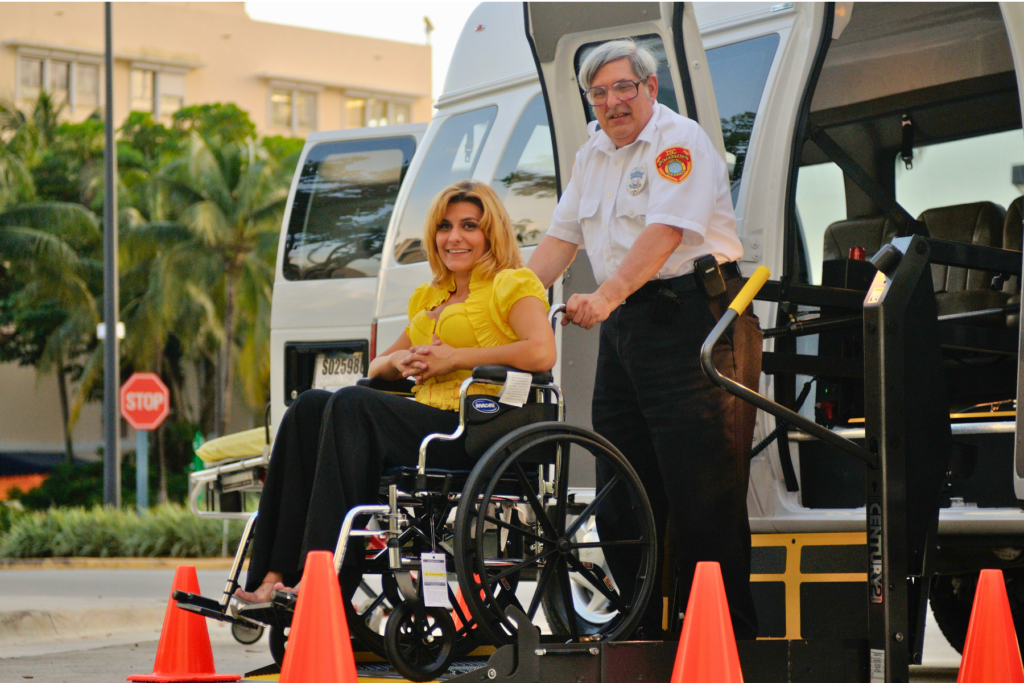
Indian Railways
Indian Railways has introduced facilities for passengers with disabilities, including designated coach arrangements and assistance services at some stations. The availability and practical usefulness of a facility can vary by station, train and journey.
Before booking, establish:
- Whether the station has a step-free route to the platform you need.
- Whether wheelchair assistance or porter support can be arranged, and how to request it.
- Whether the relevant train has a suitable coach and toilet arrangement for your needs.
- Whether you will need to cross a footbridge or use an underpass to change platforms.
- Whether the boarding gap or height difference will be manageable.
- How much time you will have to board and disembark.
IRCTC publishes information for passengers with disabilities, including the applicable booking procedures and concessions for eligible passengers. See the official IRCTC guide to facilities for persons with disabilities.
Do not assume that a wheelchair being available at a station means that the entire train journey will be accessible. Confirm the full route and the facilities on your specific service.
Metro systems
Some metro stations in Indian cities have lifts, tactile features, designated seating or other access provisions. These can make travel easier, but station-to-station conditions and the route outside the station still matter.
Before relying on a metro for a day of sightseeing, check the stations you will actually use. Confirm that lifts are operating, where the accessible entrance is located and whether your destination has a step-free route from the platform to the street.
For a traveller who cannot manage stairs, a single lift outage can change the journey considerably. Have an alternative transport option where practical.
Taxis and private vehicles
A standard taxi or app-based car is not necessarily wheelchair-accessible. Even if a wheelchair folds, the boot may not have enough room for it alongside luggage.
When arranging transport, ask:
- Is the vehicle genuinely adapted for a wheelchair, or does it simply have space for a folded chair?
- Can the passenger remain seated in their wheelchair during the journey, if required?
- Is there suitable assistance for getting in and out?
- Can the vehicle accommodate mobility equipment and luggage together?
- Can the driver reach a suitable drop-off point close to the entrance?
If you need an adapted vehicle, arrange it before arrival and get confirmation of the vehicle type. Do not assume that a regular private transfer includes a ramp, lift or securement system.
6. Visiting the Taj Mahal and other historic attractions
Historic monuments can be especially rewarding, but their age, materials, steps, uneven surfaces and conservation requirements can create accessibility barriers. A route that is manageable in one part of a site may not provide access to every building or viewpoint.
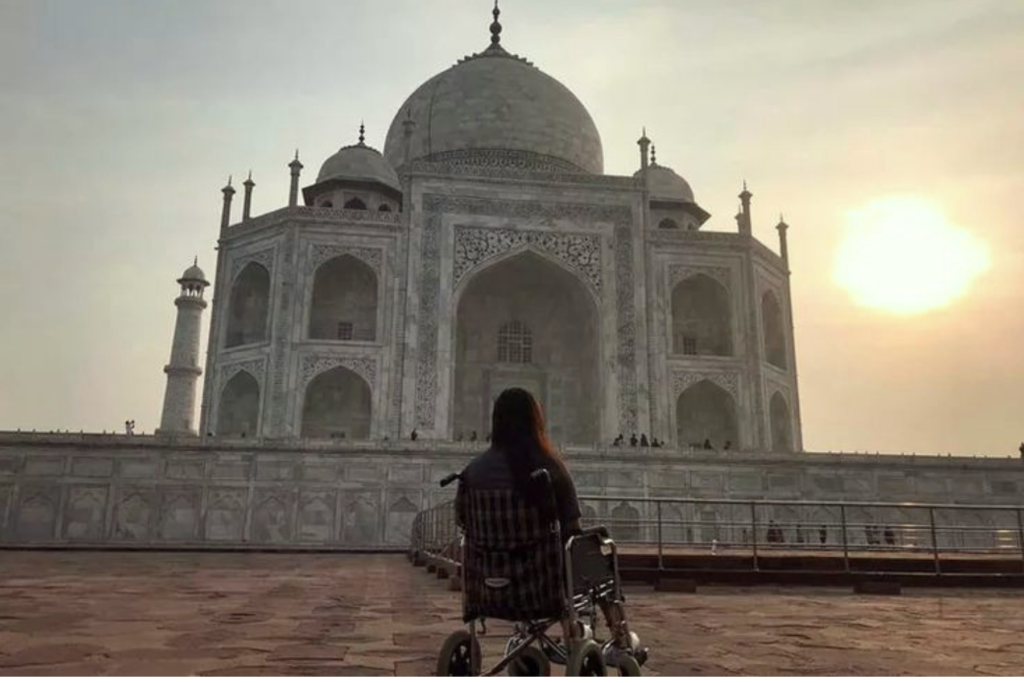
The Taj Mahal, Agra
The Taj Mahal is a useful example of why specific details matter. The official visitor information states that wheelchairs for visitors with disabilities are available at the Archaeological Survey of India (ASI) office at the monument. It also describes battery bus and golf-cart services between designated parking areas and the monument’s gates.
Check the current arrangements before visiting through the official Taj Mahal visitor information or the Agra district administration’s Taj Mahal page.
Before your visit, ask about:
- The best gate and drop-off point for your needs.
- Whether a wheelchair is available on the day and how it can be requested.
- The distance between the gate, garden paths and the main monument.
- Whether the particular areas you want to see have step-free access.
- Toilet facilities and places to rest.
- The amount of walking or assistance needed for your planned route.
Do not assume that being able to enter the complex means every interior area is accessible. The main mausoleum, raised platforms and other sections may involve steps or other obstacles. Confirm the route for the areas you want to visit and plan around what is feasible for you.
Other monuments and heritage sites
For forts, palaces, temples, museums and archaeological sites, check the access arrangements directly with the attraction or its managing authority. Look for information on ramps, lifts, toilets, seating, accessible entrances, audio guides and assistance for visitors with visual or hearing impairments.
A site’s inclusion in a tourism campaign or a list of popular attractions is not proof that it meets your access needs.
If one part of a monument is inaccessible, ask whether there is an alternative viewpoint, ground-level route or accessible interpretation. That can help you decide whether the visit is worthwhile without expecting every historic structure to be fully adapted.
7. Restaurants, markets and everyday sightseeing
Accessibility challenges often appear between the major sights: a high step at a restaurant entrance, a narrow aisle between tables, uneven paving or a toilet that is difficult to use.
For meals and shopping, check the practical details that matter to you:
- Is there a step-free entrance and enough space between tables?
- Can staff provide a menu in a readable format or communicate in writing?
- Is there a usable toilet on site, or one nearby?
- Can you sit somewhere away from loud music or intense crowds if needed?
- Is there a safe place to rest during longer walks?
- Can a vehicle drop you near the entrance without requiring a long walk?
Street markets and older shopping districts can have uneven surfaces, crowded walkways and frequent changes in level. A shorter visit at a quieter time may be more comfortable than trying to cover an entire district in one go.
Plan sightseeing around your energy and support needs, not only the number of places you hope to visit. Two well-planned stops can make for a better day than a packed itinerary that leaves little time for rest or unexpected delays.
8. Accessibility for blind and low-vision travellers
Travellers who are blind or have low vision may need help navigating unfamiliar streets, identifying signs, crossing roads or understanding the layout of a monument. Assistance and accessible information vary between providers.
Before booking, ask whether your hotel can provide clear directions, staff assistance when arriving and leaving, and information in a format you can use. For flights and train journeys, check how staff will communicate gate, platform, boarding and schedule changes.
At attractions, ask whether audio guides, tactile displays, verbal descriptions or guided visits are available. Do not assume that a guide or audio description is offered simply because the attraction is a major tourist site.
Useful preparation includes:
- Saving addresses and key information in an accessible digital format.
- Checking whether travel and ticketing apps work with your assistive technology.
- Asking staff to identify themselves and explain the route before offering physical guidance.
- Agreeing on how you would like to be assisted rather than assuming every traveller wants to be guided in the same way.
- Allowing extra time at unfamiliar interchanges and crowded locations.
For a multi-stop itinerary, a consistent guide or trusted travel companion may be useful, depending on your preferences. It should be an option that supports independence, not a requirement imposed on every blind traveller.

9. Accessibility for deaf and hard-of-hearing travellers
Communication can become difficult when essential information is delivered only through announcements, especially at airports, railway stations and crowded public spaces.
When planning your trip, ask whether important information is also displayed on screens or provided in writing. At hotels, request written confirmation of bookings, pickup details and any changes to arrangements.
Consider these steps:
- Keep your itinerary, transport bookings and accommodation addresses available in written form.
- Ask staff to write down platform, gate, departure or pickup information when needed.
- Check whether your airline or accommodation can meet any specific communication requirements.
- Ask about sign-language interpretation in advance if it is essential; do not assume it will be available on demand.
- Use text-based communication when it is the clearest option for you.
If you use hearing aids or other assistive equipment, consider power, charging and storage needs when planning longer journeys. Keep essential equipment and accessories accessible rather than packed in checked luggage.
10. Sensory, cognitive and non-visible access needs
Not every access need is immediately visible. Some travellers need predictable routines, quieter spaces, shorter queues, time away from crowds or clear step-by-step information. Others may need regular rest, access to medication or flexibility around fatigue and pain.
India’s busiest stations, markets, religious sites and festivals can be loud and crowded. The experience can be rewarding, but it may not suit every traveller at every time of day.
To make the trip more manageable:
- Choose quieter visiting times where the attraction permits it.
- Build rest breaks and unplanned time into the itinerary.
- Ask whether a hotel can provide a quieter room away from lifts, event spaces or busy roads.
- Keep written schedules and addresses available.
- Tell a tour provider which arrangements would help, without feeling obliged to disclose private medical details.
- Confirm access to any essential medication, food, equipment or support.
If a provider cannot meet a particular need, it is better to know before paying than to discover the limitation after arrival.
11. Planning an accessible itinerary in India
The best itinerary is not necessarily the one with the most stops. It is the one in which the accommodation, transport, attractions and rest periods work together.
Start with the most important access requirements and plan the route around them.
A practical planning sequence
- List your essential requirements. Identify the barriers that would prevent you from using a room, boarding transport or visiting a place.
- Choose destinations based on evidence. Look for specific information about the sites, routes and services you want to use.
- Confirm accommodation directly. Get written answers and measurements or photographs where needed.
- Arrange transport. Check vehicle type, boarding, assistance, equipment space and drop-off points.
- Contact attractions. Confirm the route, facilities and any assistance or booking arrangements.
- Keep the schedule realistic. Allow time for transfers, rest, meals and unexpected delays.
- Have an alternative. Identify another activity or a way to shorten the day if a lift, vehicle or access facility is unavailable.
If you are planning a Delhi–Agra–Jaipur itinerary, for example, assess each city and attraction separately rather than assuming that accessibility in one part of the route carries over to the next. Taj Explore’s destination pages for New Delhi, Agra and Jaipur can help with general destination planning. Specific access arrangements still need to be confirmed with hotels, transport providers and attractions.
Frequently asked questions
Is India wheelchair-accessible?
Some airports, metro stations, hotels and tourist attractions provide useful wheelchair-access features, but coverage is inconsistent. Check the complete route and the specific facilities you need rather than relying on a general label.
Can wheelchair users visit the Taj Mahal?
The official visitor information states that wheelchairs are available through the ASI office at the Taj Mahal. However, access can vary between parts of the complex. Confirm current arrangements, distances, routes and any steps in the areas you intend to visit before travelling.
Are Indian hotels required to have accessible rooms?
Do not assume that every hotel offers a room with the specific features you need. Confirm the room, entrance, bathroom, lifts and shared facilities directly with the property. Legal standards and obligations are not a substitute for checking the actual accommodation available for your dates.
Can travellers with visual or hearing impairments visit India independently?
Some travellers do, but the support and accessible information available vary by location and provider. Check communication methods, navigation assistance, accessible information and transport arrangements in advance. The right plan depends on the traveller’s preferences and individual needs.
Should I book a specialised accessible tour?
It may be helpful if you need an adapted vehicle, assistance across several destinations or coordinated arrangements at multiple attractions. Ask the operator to explain exactly what is included and which facilities have been checked. Do not assume that a tour described as accessible will meet every requirement.
What is the most important thing to check before booking?
Start with the feature that is essential to your independence or safety—for example, a step-free bathroom, a suitable vehicle, boarding assistance or accessible communication. Get specific written confirmation before paying.
Final thoughts
Accessible travel in India is best approached with detailed information, realistic expectations and a willingness to plan around individual needs. Facilities are improving in some areas, but the experience can vary considerably between a hotel, a transport connection, a modern public space and a historic monument.
Ask specific questions, confirm the arrangements that matter most and leave enough time for the journey between attractions. The aim is not to plan every moment perfectly; it is to make informed choices so that more of your time can be spent experiencing India and less dealing with avoidable barriers.







Comment (0)