

Meta description: Discover India’s street food, from Delhi chaat to Mumbai vada pav and Kolkata puchka, with regional favourites, ordering tips and practical food-safety advice.
India’s street food is best understood one neighbourhood, market and meal at a time. A paper plate of crisp chaat in Delhi, a hot vada pav in Mumbai or a bowl of steaming momos in the northeast can tell you something about the place serving it.
There is no single Indian street-food tradition. Recipes change across states and cities; the same snack may have different names, fillings or accompaniments a few hundred kilometres away. Some dishes are eaten standing beside a cart, others at a busy market counter or a modest shop that has served the same speciality for generations.
For visitors, street food offers an accessible way to encounter local food culture. The trick is knowing what to try, how to order, and how to make sensible choices about where you eat.
What counts as Indian street food?
Street food includes snacks, quick meals, drinks and sweets sold from roadside carts, market stalls, small counters and modest food shops. Some vendors specialise in one preparation; others offer a short menu that changes with the time of day.
You’ll find foods that are fried to order, breads cooked on a hot griddle, savoury mixtures assembled in front of you, steamed dumplings, grilled kebabs and regional sweets. Not everything sold at a small shop is technically street food, and not every popular dish is eaten outdoors. The boundaries are flexible.
Street food also reflects local habits. A morning snack in one city may be a late-evening favourite in another. Following the rhythm of the neighbourhood can be as rewarding as following a list of famous dishes.
Indian street food to try
You don’t need to sample everything on your first visit. Start with a few dishes that appeal to you, then explore from there.
1. Chaat — a mix of textures and flavours
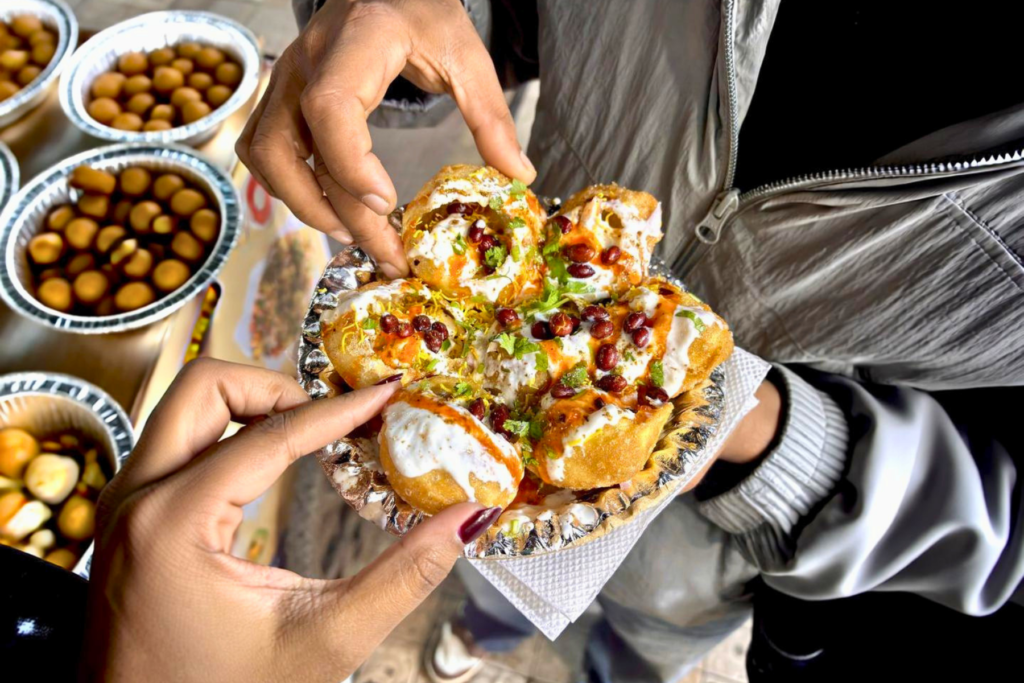
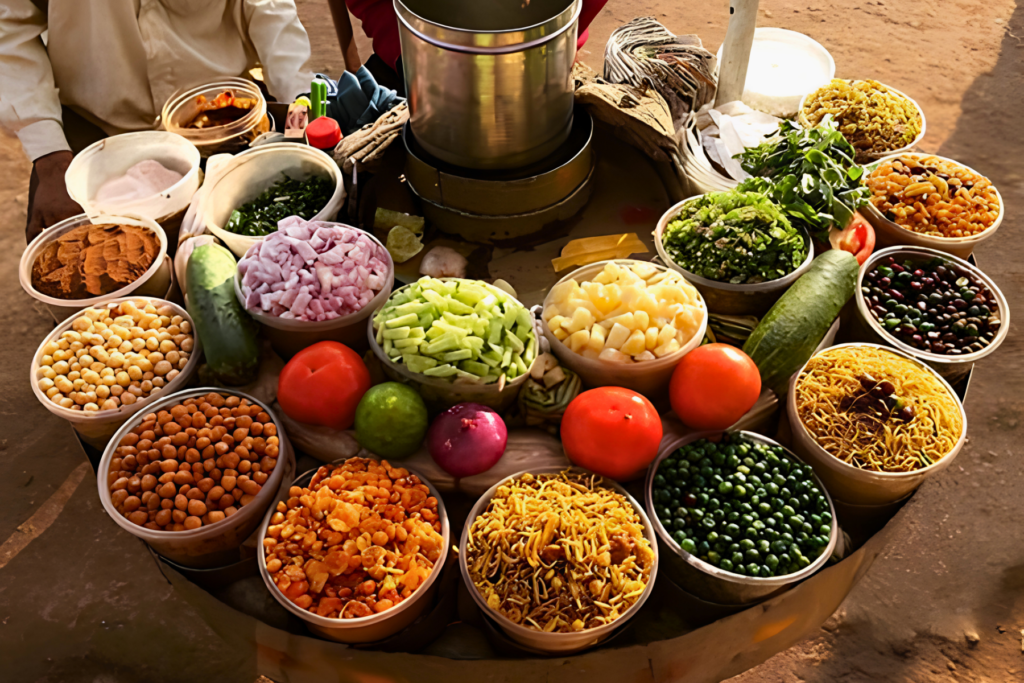
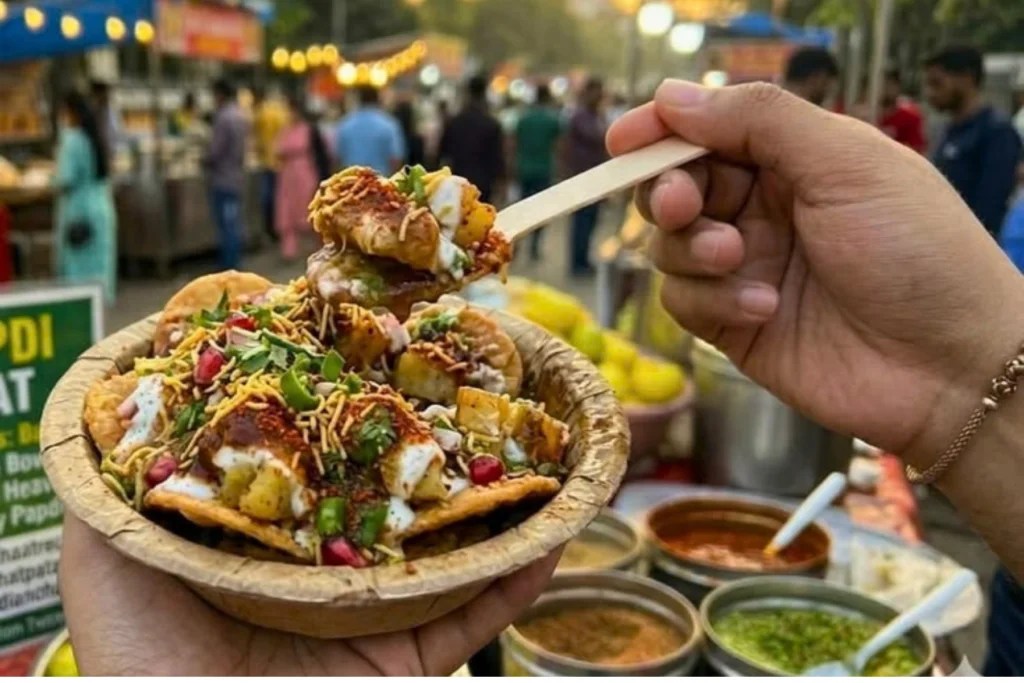
Chaat is a broad family of savoury snacks rather than one specific dish. Depending on the preparation, you may find crisp fried pieces, potatoes, chickpeas, yoghurt, chutneys, spices and crunchy toppings together.
The appeal is contrast: tangy tamarind, fresh herbs, sweetness, heat and crunch can all appear in the same serving. Aloo tikki chaat, made around a potato patty, is one common version.
Where to look: Delhi is a well-known place to explore chaat, but related snacks appear in many forms across northern and western India.
What to know: Ask for less chilli if needed, but remember that spice can come from chutneys as well as the main mixture.
2. Pani puri, golgappa and puchka
These names refer to closely related snacks, although recipes and serving styles vary. A crisp, hollow shell is filled with ingredients such as potato or chickpeas and flavoured water or chutneys. The result is usually eaten in one bite.
In Delhi, you may hear golgappa; in Mumbai, pani puri is common; in Kolkata, puchka is widely recognised. These labels are useful starting points, not strict boundaries for every local recipe.
Where to look: Local snack stalls and chaat shops in the cities where these versions are popular.
What to know: The flavoured water is often the main practical consideration for travellers who are cautious about foodborne illness. If you are unsure about the water source or handling, choose another freshly cooked snack instead.
3. Vada pav — Mumbai’s iconic quick bite
Vada pav consists of a spiced potato fritter tucked into a soft bread roll, often accompanied by chutneys and dry garlic or chilli seasoning. It’s compact, filling and easy to eat between sightseeing stops.
Where to look: Mumbai, especially busy neighbourhoods and market areas where vendors serve a steady stream of customers.
What to know: The seasoning can be fiery. If you prefer mild food, ask about the chutneys before they are added.
4. Pav bhaji — vegetables, butter and bread
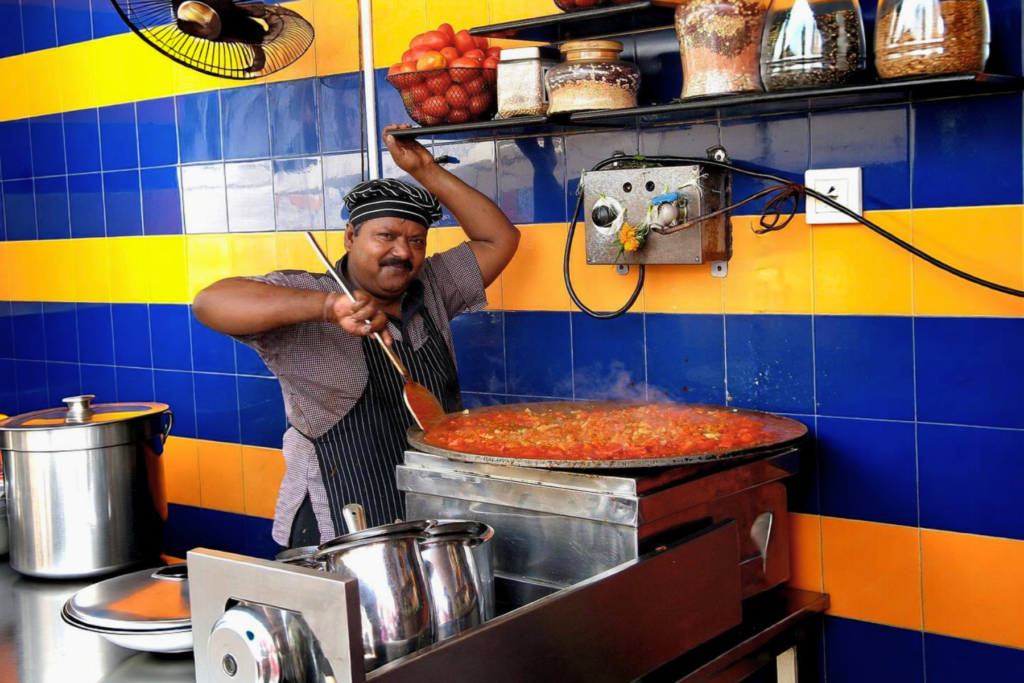
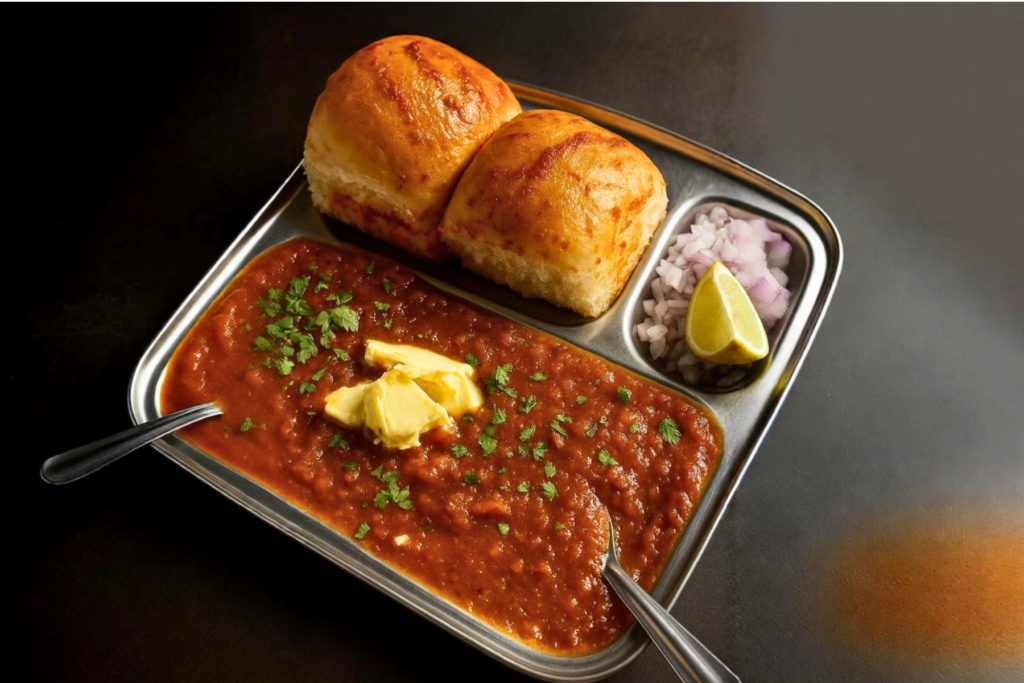
Pav bhaji is a thick, spiced vegetable preparation served with bread rolls toasted on a hot griddle. It is associated particularly with Mumbai’s food culture, though it is now found far beyond the city.
It makes a more substantial meal than many small snacks. The bhaji is commonly served with chopped onion, lemon and a generous amount of butter, although portions and recipes differ.
Where to look: Mumbai snack counters and casual eateries.
What to know: Ask whether the dish contains dairy if you avoid butter, and check how much chilli is used.
5. Samosas and kachoris — crisp, savoury pastries
Samosas are fried or baked pastry parcels commonly filled with spiced potatoes and peas, although other fillings exist. Kachoris are another family of stuffed pastries, with fillings and flavours varying by region.
They are often sold at sweet shops, market counters and roadside stalls. A samosa may be a quick snack on its own or be broken into a larger chaat preparation.
Where to look: Across northern and western India, with regional variations in filling, seasoning and accompaniments.
What to know: Ask about the filling if you have dietary restrictions. A vegetarian filling does not automatically mean the food was prepared separately from meat or other allergens.
6. Dosa, idli and vada — South Indian favourites
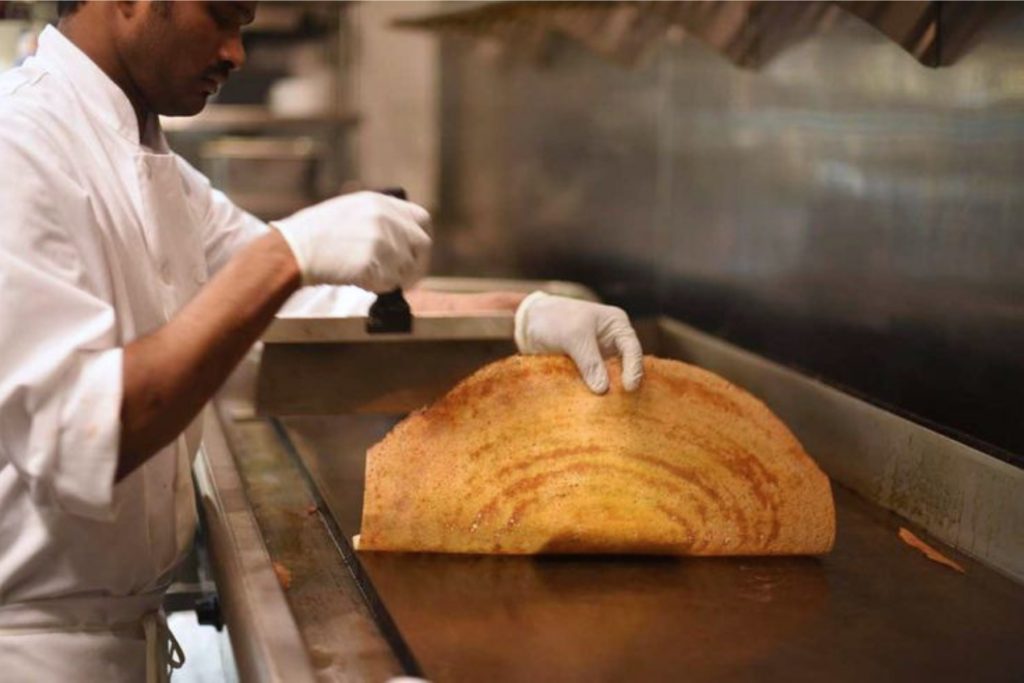
South Indian food offers excellent options for visitors looking for something beyond fried chaat. Dosas are thin preparations made from fermented rice-and-lentil batter, often cooked on a hot griddle. Idlis are steamed cakes made from a similar fermented batter, while vadas are savoury fritters.
They are commonly served with chutneys and sambar, a lentil-based preparation whose ingredients and flavour vary by region.
Where to look: South Indian breakfast counters and eateries throughout southern India; these dishes are also widely available elsewhere in the country.
What to know: Plain idli is steamed rather than fried, but accompaniments may contain ingredients you need to check. Dosas may be cooked with oil or ghee, depending on the vendor.
7. Jhalmuri and Kolkata’s puchka
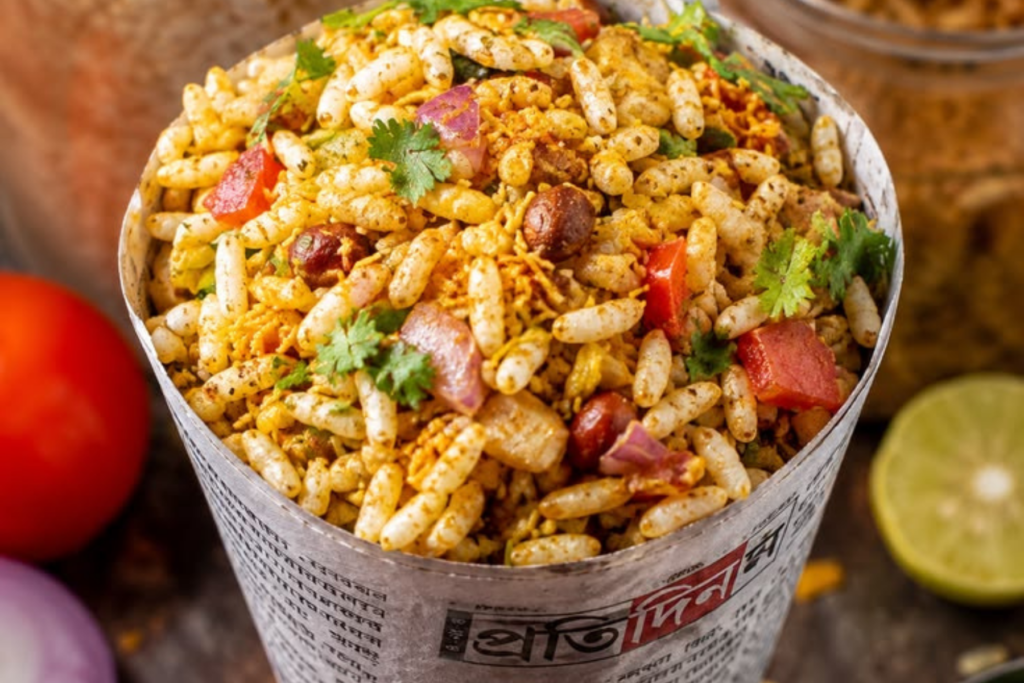
Jhalmuri is a Bengali snack built around puffed rice, mixed with ingredients such as mustard oil, chopped vegetables, spices and crunchy additions. Vendors prepare it to order, creating a snack that is light, sharp and aromatic.
Kolkata’s puchka is another local favourite, often distinguished by its filling and tangy, spiced water. Comparing it with versions elsewhere is one way to discover how a familiar idea changes from city to city.
Where to look: Kolkata’s markets and neighbourhood snack stalls.
What to know: Mustard oil gives jhalmuri a distinctive flavour. If you have not tried it before, start with a small portion.
8. Momos — steamed or fried dumplings
Momos are dumplings with roots in Himalayan and Tibetan food traditions that have become popular in many Indian cities. Fillings commonly include vegetables or meat, and the dumplings may be steamed or fried and served with a spicy sauce.
Where to look: Himalayan regions and urban neighbourhoods across India, including markets with strong Tibetan and northeastern food influences.
What to know: Confirm the filling and whether the sauce is spicy. If you have a wheat allergy or need to avoid particular ingredients, ask about the dough and preparation.
9. Kebabs and rolls
In parts of northern India, especially in cities with strong Mughlai and Awadhi food traditions, you’ll find kebabs cooked over charcoal or on a griddle. Rolls may wrap kebabs, eggs or vegetables in flatbread, making them convenient meals on the move.
Where to look: Specialist kebab shops and busy evening food streets, including parts of Delhi and Lucknow.
What to know: Meat, dairy, egg and sauces may all be involved. Ask about ingredients and cooking methods if you follow a particular diet.
10. Regional snacks worth seeking out
Some of India’s most rewarding street-food discoveries are less familiar to international visitors.
- Amritsar: Amritsari kulcha, a stuffed bread commonly served with chickpea curry.
- Jaipur: Kachori varieties and other savoury snacks sold at local counters.
- Hyderabad: Mirchi bajji, a chilli fritter that can be quite hot.
- Gujarat: Dhokla and other savoury snacks made with regional ingredients and techniques.
- Kerala: Banana chips and local snacks influenced by the state’s ingredients and food traditions.
- Across many cities: Roasted corn, seasonal fruit, chai and regional sweets, each with local variations.
These examples are a starting point, not a complete map of regional food. Ask residents what is distinctive about the neighbourhood you are visiting, and look beyond the most internationally famous dishes.
Where to experience street food in India
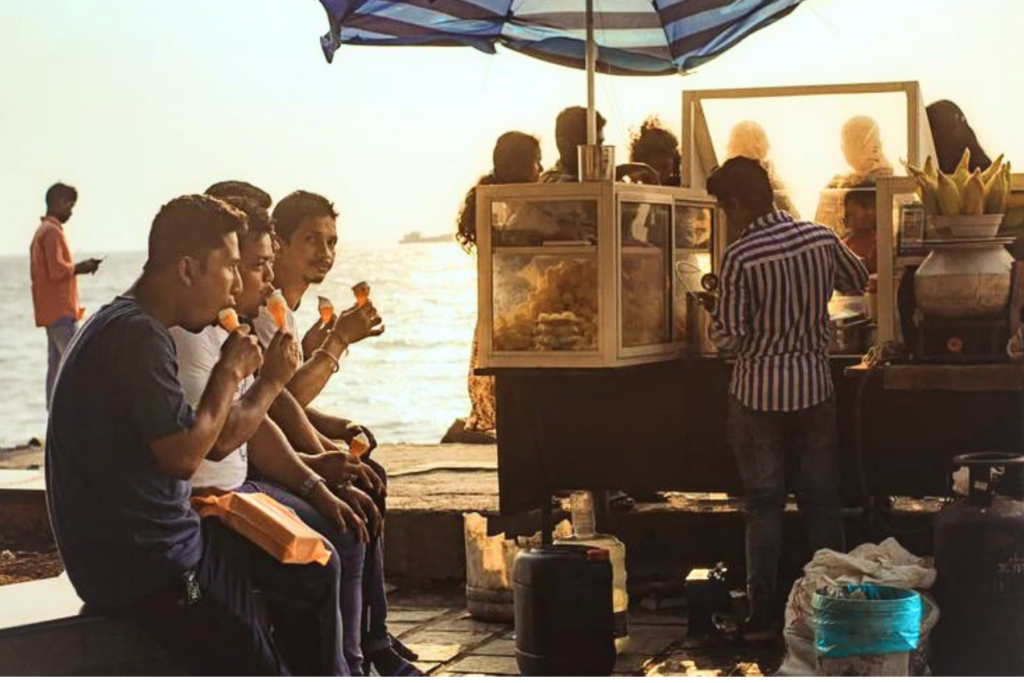
The best place to begin depends on your itinerary. Rather than travelling across the country for a single snack, explore the food culture of the cities already on your route.
Delhi
Delhi is a useful introduction to northern Indian street food, with chaat, stuffed breads, fried snacks and kebabs all forming part of its wider food scene. Old Delhi’s historic market lanes are a well-known starting point for visitors interested in food and architecture together.
Allow time to explore rather than rushing between famous names. A busy food lane can be crowded, and the most enjoyable route is not always the one with the most stops.
Explore Taj Explore’s New Delhi destination guide when planning your time in the city.
Mumbai
Mumbai’s street-food culture includes vada pav, pav bhaji, bhel puri and a range of sandwiches and savoury snacks. The city’s food reflects its working rhythms, coastal setting and long history of migration.
Choose a few dishes rather than treating every stop as a full meal. Some snacks are small, but rich toppings, chutneys and fried ingredients can make them more filling than they look.
See Taj Explore’s Mumbai destination guide for help planning your visit.
Kolkata
Kolkata offers puchka, jhalmuri, rolls and a distinctive sweet-shop culture. Its food traditions reflect Bengali tastes as well as a long history of cultural exchange and migration.
Try a savoury snack and leave room for a sweet from a reputable shop. If a dish is unfamiliar, asking the vendor how it is made can be a useful introduction.
Jaipur
Jaipur is a good place to explore Rajasthani snacks alongside the city’s palaces, markets and historic neighbourhoods. Kachoris, fried savouries and sweets are among the options visitors may encounter.
Because Rajasthan’s food traditions extend well beyond its most famous tourist dishes, ask about local specialities rather than ordering only what you already recognise.
Beyond the big cities
Street food is not confined to Delhi, Mumbai, Kolkata or Jaipur. Cities and towns across India have their own breakfast stalls, market snacks, regional breads, dumplings, drinks and sweets.
For example, the official Incredible India tourism website highlights the mix of Garhwali, Kumaoni and Tibetan influences found in Dehradun’s food scene. That kind of regional specificity is a useful reminder: the most interesting snack on your route may be a local speciality rather than a nationally famous dish.
How much does Indian street food cost?
Street food is often more affordable than a full-service restaurant, but prices vary substantially with the city, neighbourhood, ingredients, portion size and type of establishment. A simple snack at a local market will not necessarily cost the same as a speciality dish at a well-known shop or a food stall in a premium tourist area.
As a rough planning guide only, a simple snack might cost around ₹20–₹100, while a more substantial serving or a premium-location option may be ₹100–₹250 or more. These are indicative estimates, not verified prices for a particular city or vendor.
Before publishing this guide, check a sample of current menus or local listings in the featured cities and update these ranges if needed. Do not assume a price remains accurate simply because it appeared in an older article.
If a price is not displayed, ask before ordering. It is reasonable to clarify the cost and portion size, especially when buying several items.
How to choose a street-food stall
No visual sign can guarantee that food is safe, but you can make more informed choices by paying attention to preparation and handling.
- Look for food prepared to order. Watching a dish being cooked thoroughly in front of you can help you judge how it is handled.
- Notice turnover. A steady stream of customers may mean ingredients are used quickly, although popularity alone is not proof of hygiene.
- Observe the vendor’s handling practices. Look for clean utensils, sensible separation of raw and cooked ingredients, and food protected from dust, insects and unnecessary contact.
- Be careful with water and ice. Avoid assuming that tap water or ice is safe to consume. Be particularly cautious with uncooked ingredients washed in water of uncertain quality.
- Choose freshly cooked options when uncertain. Hot, thoroughly cooked dishes may be a more prudent choice than food that has been sitting out.
- Trust your judgement. If the stall’s handling practices concern you, choose another place. You do not have to eat something just because it is famous.
The Food Safety and Standards Authority of India provides public information about food safety and its Clean Street Food Hub initiative. The initiative sets hygiene and sanitation benchmarks for participating food-street clusters; it should not be interpreted as a guarantee that every stall in a market is certified.
For additional consumer information, visit the official FSSAI consumer portal.
Spice, allergies and dietary preferences
Indian street food is not uniformly spicy. Some dishes are mild, while others rely on green chillies, chilli powders or fiery chutneys. Tell the vendor what you can tolerate, and ask for sauces to be served separately where possible.
A few useful phrases:
- “Kam mirch, please.” — Less chilli, please.
- “Teekha hai?” — Is it spicy?
- “Isme kya hai?” — What is in this?
- “Bina dahi.” — Without yoghurt.
- “Bina anda.” — Without egg.
These phrases may be understood in many Hindi-speaking settings, but wording and comprehension vary by region. English may work in some tourist areas; elsewhere, a translation app or pointing to ingredients can help.
If you have a food allergy, be explicit about the ingredient and ask about shared cooking surfaces, oil and utensils. A vendor may not be able to guarantee the absence of cross-contact, so avoid food when you cannot get a reliable answer.
If you are vegetarian, vegan, halal-observant or avoiding particular ingredients for religious or personal reasons, ask about the specific preparation rather than relying on the dish’s name alone. Recipes and practices vary between vendors.
Should you take a street-food tour?
A guided food walk can be helpful if you are visiting India for the first time, feel uncertain about ordering, or want to understand the history and neighbourhood context behind what you eat. A knowledgeable local guide can explain unfamiliar dishes, help with language, and plan a manageable route.
Independent exploration can be just as rewarding if you prefer to move at your own pace. You can also combine both approaches: take one guided walk early in your trip, then use what you learn to explore independently.
If Bangalore is on your itinerary, compare the available options in Taj Explore’s Bangalore listings and check the current details of any food-focused tour before booking.
Frequently asked questions
Is Indian street food safe for tourists?
It can be enjoyed by many travellers, but no stall or dish is risk-free. Choose food that is handled carefully and cooked thoroughly, be cautious with drinking water, ice and uncooked ingredients, and avoid stalls where hygiene concerns are visible. People with specific medical or dietary needs may need extra precautions.
What is the best Indian street food for a first-time visitor?
Start with something familiar in format but local in flavour, such as a freshly cooked samosa, dosa or vada pav. If you are comfortable with spice and confident about the handling, try a local chaat or another regional speciality.
Is Indian street food always spicy?
No. Some dishes are mild, while others can be very hot. Chutneys and seasoning may add extra heat, so ask about the preparation and request less chilli when possible.
Can vegetarians eat street food in India?
There are many vegetarian street-food options, including dosas, idlis, samosas, kachoris and a wide range of chaat. However, ingredients and preparation vary. Ask about dairy, egg, shared utensils and cooking surfaces if these matter to you.
How much money should I carry for street food?
Carry some small-denomination Indian rupee notes as a practical backup. Prices vary, and not every small vendor accepts digital payments or cards. Ask the price before ordering if it is not displayed.
What should I drink with street food?
Chai is a familiar option in many parts of India, and sealed bottled water is widely available. Fresh juices, lassi and other drinks vary in preparation and handling, so use the same judgement about cleanliness and water quality as you would for food.
Experience India one bite at a time
Indian street food is not one flavour or one way of eating. It is a collection of local traditions shaped by ingredients, communities, workdays, markets and family recipes.
Start with a few dishes that interest you, pay attention to the place where you are eating, and leave room for something you have never tried before. A good food experience does not require a long checklist. Sometimes it begins with a vendor preparing one dish exceptionally well, a local explaining how it is eaten, and the curiosity to take the next bite.




Comment (0)